

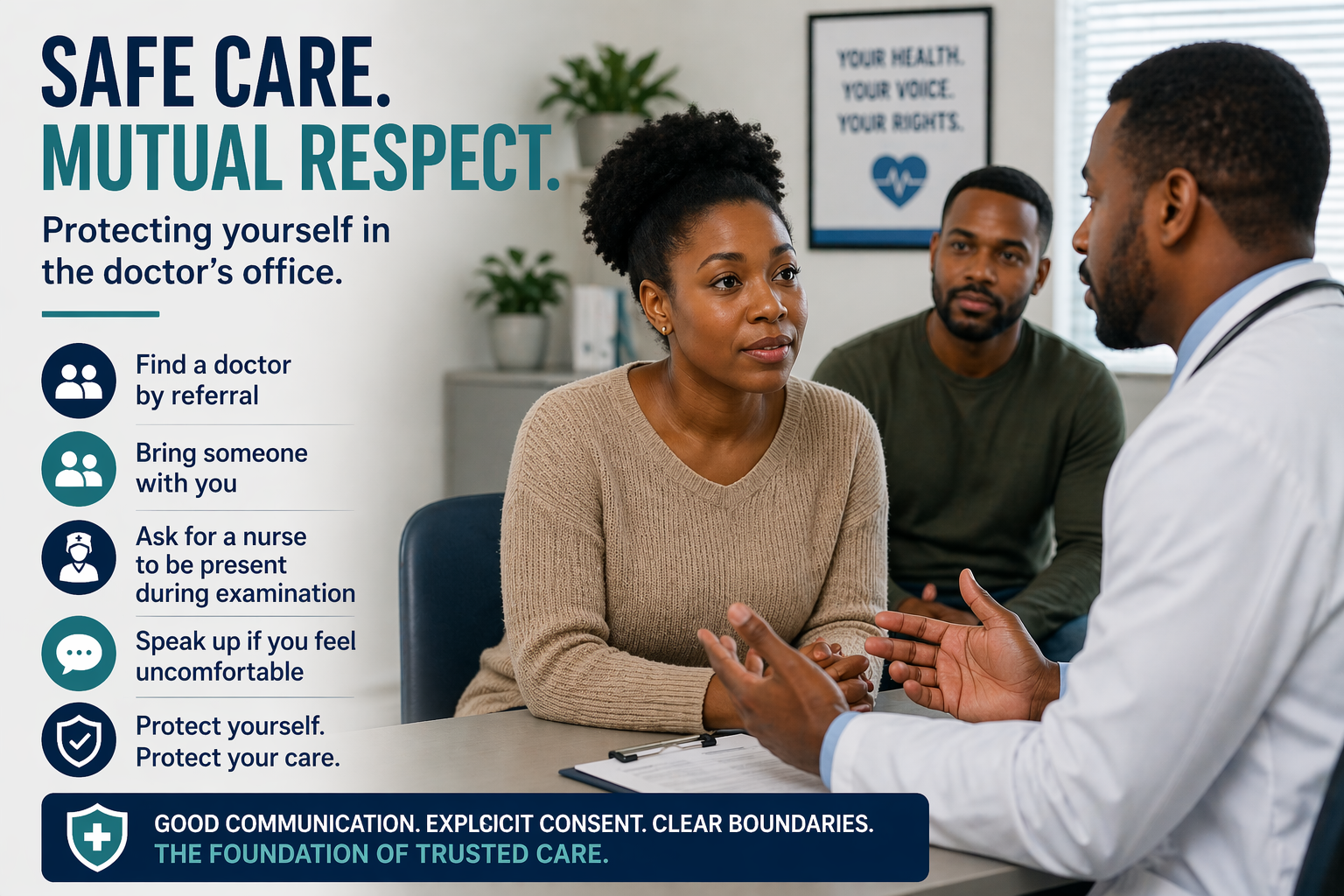
Sexual misconduct in the medical setting is one of those topics people are often hesitant to discuss openly—yet it sits at the intersection of trust, vulnerability, and professional responsibility. The doctor–patient relationship is built on an inherent power imbalance: patients disclose deeply personal information and often submit to physical examinations that would otherwise be unacceptable in any other context. That reality makes clear safeguards—on both sides—not just advisable, but essential.
The Patient’s Position: Protecting Yourself Without Losing Trust
For patients, the goal is not to approach every consultation with suspicion, but to be empowered, informed, and prepared.
One of the simplest and most effective protections is choosing your doctor through trusted referrals—whether from family, friends, or other healthcare professionals or through consultthedoc.com. A recommendation provides an initial layer of reassurance about professionalism and conduct.
When seeing a doctor for the first time—especially for consultations that may involve intimate examinations—bringing a trusted companion can be helpful. This is not a sign of mistrust; it is a practical step that can provide emotional comfort and an additional layer of accountability.
Equally important is understanding your right to request a chaperone, typically a nurse, during any intimate examination. This is standard practice in many healthcare systems and should never be viewed as unusual or offensive. A chaperone serves multiple roles: safeguarding the patient, supporting the doctor, and ensuring that the interaction remains transparent and appropriate.
Patients should also feel empowered to pause or discontinue a consultation at any point. If something feels inappropriate—whether it is a comment, a gesture, or the manner in which an examination is conducted—it is entirely within your rights to say so. Discomfort is sufficient reason; you do not need to justify it.
When Boundaries Are Crossed the Other Way
While much of the conversation rightly focuses on protecting patients, it is equally important to acknowledge that doctors can also be subjected to inappropriate behavior.
There are instances where patients may request unnecessary genital examinations, make sexually suggestive remarks, or behave in ways that cross professional boundaries. This places clinicians in a difficult position, particularly given the expectation to remain composed and professional at all times.
Doctors can protect themselves by:
- Ensuring a nurse or chaperone is present during any sensitive examination
- Clearly documenting the clinical indication for intimate examinations
- Maintaining firm, professional communication when declining inappropriate requests
Importantly, the presence of a chaperone is not only about patient safety—it is also a critical safeguard against false allegations. In an era where reputations can be irreparably damaged by unverified claims, this protection is indispensable.
The Grey Zone: When Discomfort Is Unintentional
Not all uncomfortable encounters arise from misconduct. Sometimes, poor communication or assumptions can create distress for patients.
A doctor who proceeds with an examination without clearly explaining what they are doing—or why—may unintentionally cause anxiety or embarrassment. Similarly, failing to pause for explicit consent before initiating a sensitive part of the examination can blur boundaries, even when the intention is entirely clinical.
Good practice should always include:
- Clear explanations of what the examination involves and why it is necessary
- Step-by-step communication during the process
- Explicit consent before proceeding, particularly for intimate examinations
- Sensitivity to non-verbal cues such as hesitation or discomfort
A simple question—“Is it okay if I proceed?”—can make a profound difference.
Creating a Culture of Mutual Respect
Ultimately, preventing sexual misconduct in the clinical setting is not about suspicion—it is about structure, communication, and respect.
Patients should feel confident to:
- Ask questions
- Request a chaperone
- Decline or delay examinations
- Speak up when something feels wrong
Doctors, in turn, should:
- Normalise the presence of chaperones
- Communicate clearly and empathetically
- Maintain firm boundaries
- Document interactions appropriately
The consultation room should be a space where clinical necessity is never confused with personal intrusion, and where both patient and doctor feel protected.
Silence and discomfort are what allow inappropriate behaviour—whether intentional or not—to persist. Openness, structure, and shared responsibility are what prevent it.
