



Dr. Pryce is NOT currently accepting any new patients.
Professional Overview
Consultant General Surgeon with over 15 years of clinical experience in the diagnosis and surgical management of a wide range of general surgical conditions. Experienced in both elective and emergency surgery, with a strong commitment to patient-centred care, surgical precision, and evidence-based practice.
Special Interest: Hernia Repair Under Local Anaesthesia
A key area of expertise is hernia repair, with a particular focus on surgery under local anaesthesia.
For appropriately selected patients, this approach offers several potential benefits:
– Avoidance of general anaesthesia
– Faster recovery and earlier mobilisation
– Reduced anaesthesia-related risks
– Shorter hospital stays
– Earlier return to daily activities
– An alternative for selected older adults and patients with underlying medical conditions
Each patient undergoes an individual assessment to determine the most appropriate surgical technique and anaesthetic approach, prioritising safety, comfort, and long-term outcomes.
Clinical Expertise
– General and emergency surgery
– Hernia assessment and repair
– Abdominal surgery
– Minor surgical procedures
– Management of common general surgical conditions
– Preoperative assessment and postoperative care
Professional Memberships & Leadership
– Fellow of the American College of Surgeons (FACS)
– Council Member, Association of Surgeons of Jamaica
Hospital Affiliation
Kingston Public Hospital (KPH), Jamaica
– Andrews Memorial Hospital
– Nuttall Hospital
– Medical Associates Hospital
Private practice Locations:
– GPS Medical
– Mountain View Medical
– Bola Health
Leave a Review Cancel reply

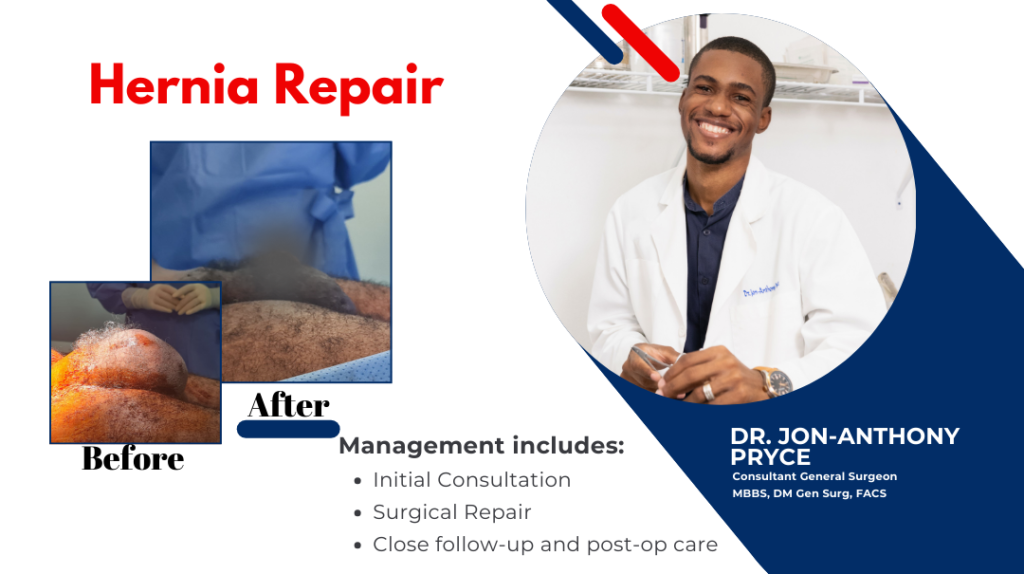
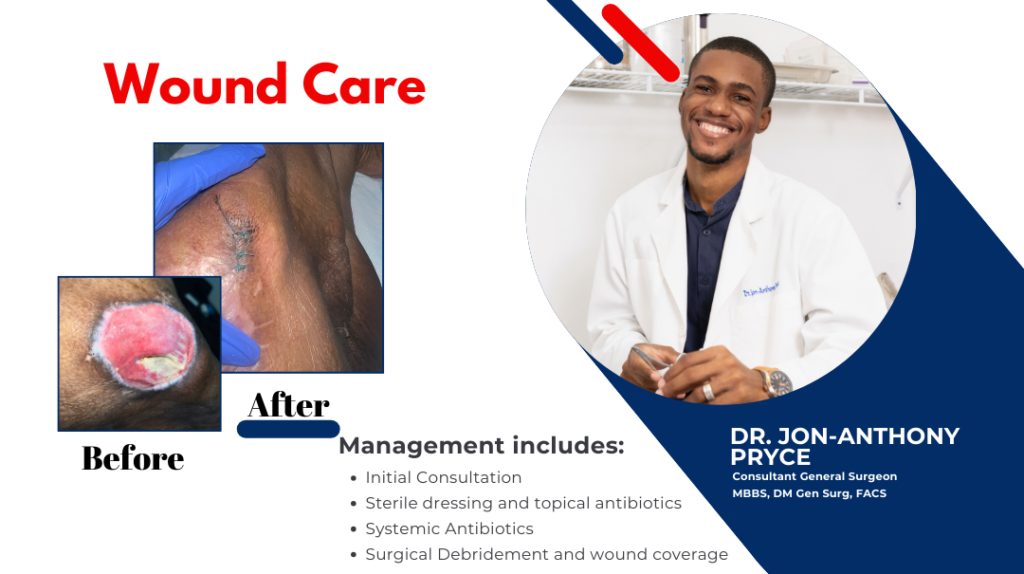
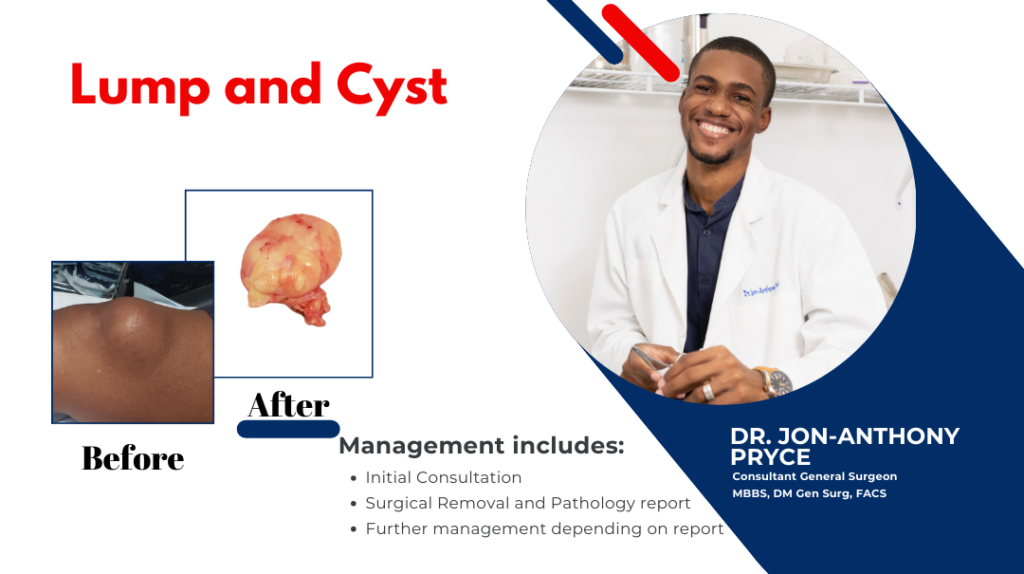
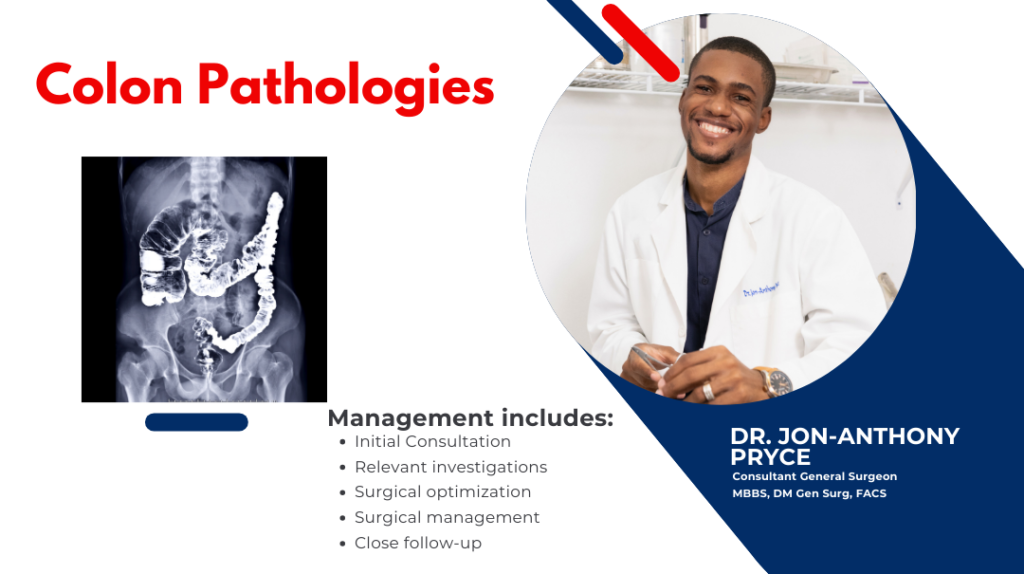
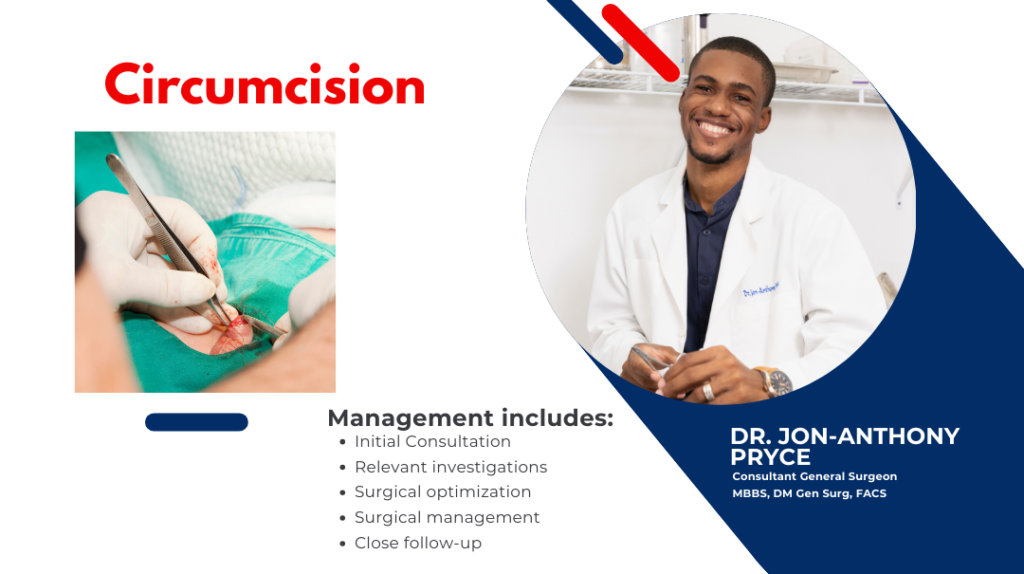
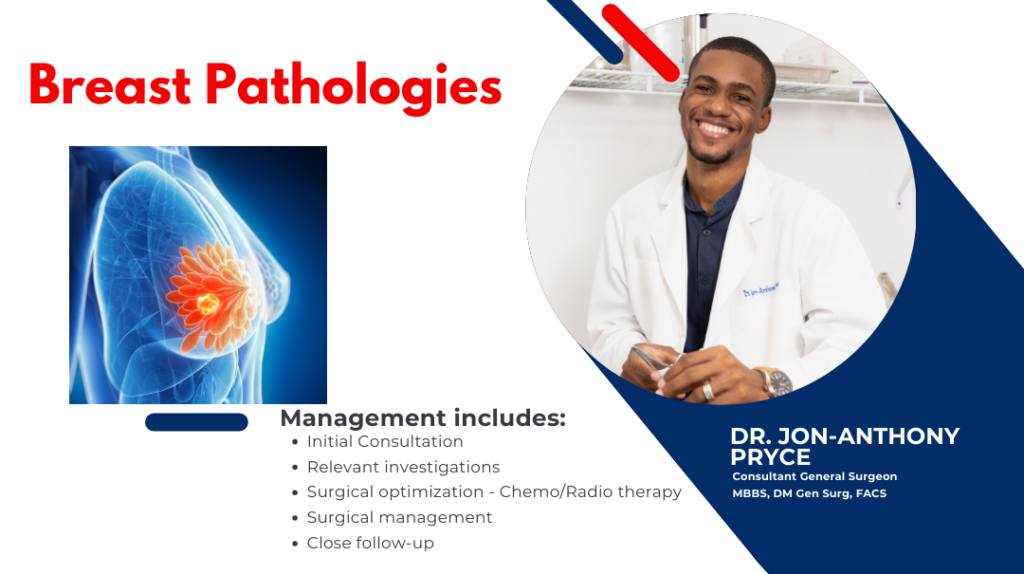
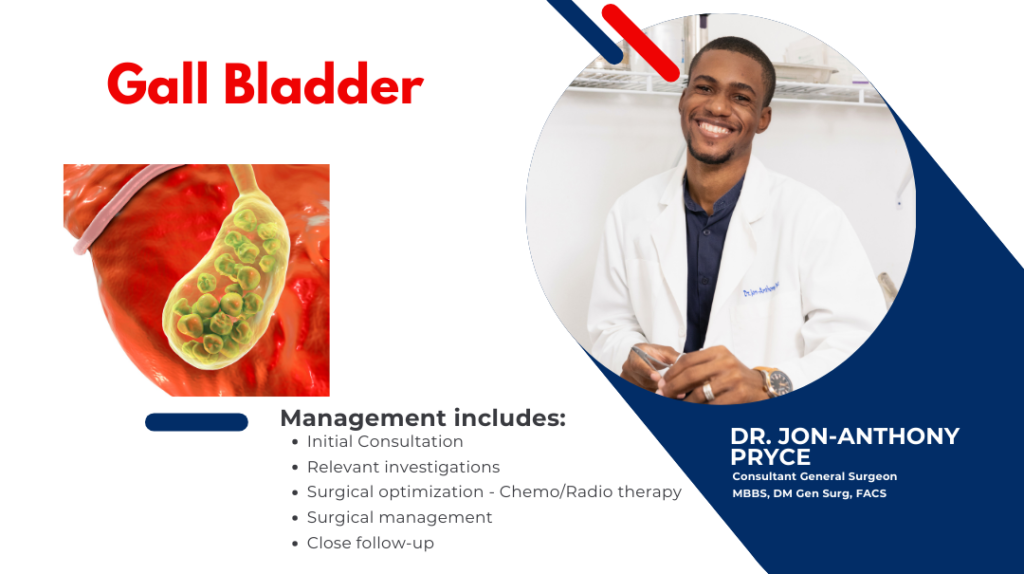
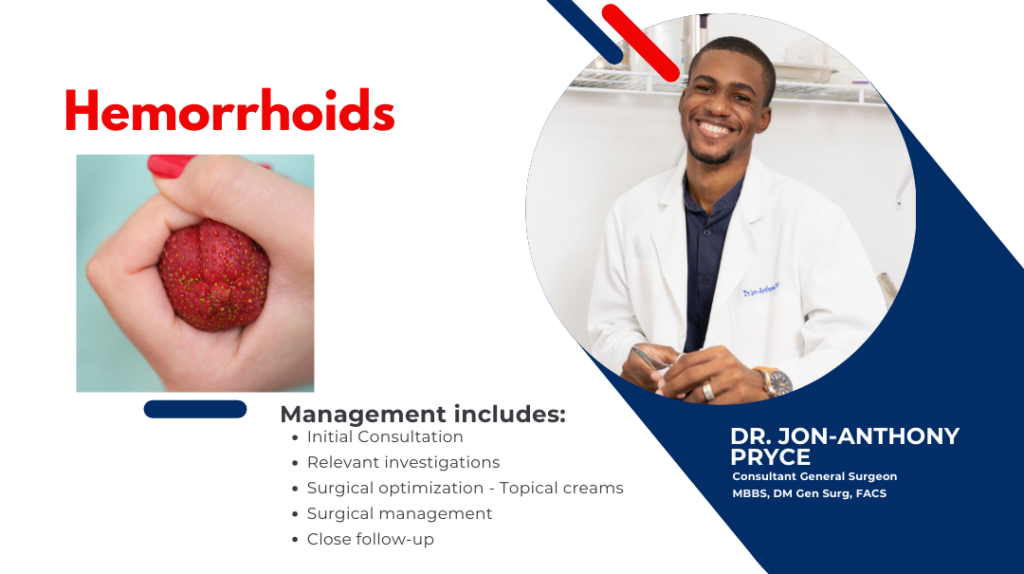
I’ve changed the section headings that were bold to ALL CAPS and removed bold formatting.
HERNIAS
1. Who treats a hernia?
A General Surgeon diagnoses and treats hernias, including inguinal, umbilical, incisional and other abdominal wall hernias.
2. What are the common symptoms of a hernia?
A hernia may cause a visible bulge, pressure, discomfort or pain, particularly when standing, coughing, lifting or straining.
3. Can a hernia be repaired under local anaesthetic?
Yes. Selected hernias can be repaired under local anaesthetic, meaning the surgical area is numbed while the patient remains awake. Suitability depends on the type and size of the hernia, the patient's health and the planned procedure.
4. What are the advantages of hernia repair under local anaesthetic?
For appropriately selected patients, local anaesthesia avoids general anaesthesia and may allow earlier mobilisation, a shorter postoperative recovery period and same-day discharge.
5. Will I be awake during hernia surgery under local anaesthetic?
Yes. The surgical area is numbed so that you should not feel sharp surgical pain. Sedation may sometimes be offered to help you relax.
6. Will I feel pain during hernia surgery under local anaesthetic?
The aim is to numb the operative area. Patients may still be aware of pressure, movement or pulling sensations. Additional local anaesthetic can be administered when necessary.
7. Can an elderly patient have hernia surgery under local anaesthetic?
Possibly. Age alone does not determine suitability. Local anaesthetic repair may be considered for selected older patients, particularly when avoiding general anaesthesia may be advantageous.
8. Can someone with other medical conditions have hernia repair under local anaesthetic?
Potentially. Patients with heart, lung or other medical conditions require individual assessment to determine the safest surgical and anaesthetic approach.
9. Does every hernia need surgery?
No. Some minimally symptomatic hernias may be monitored in selected patients. Painful, enlarging or troublesome hernias should be assessed by a surgeon.
10. Can a hernia get bigger if I leave it untreated?
Yes. Some hernias gradually enlarge over time, although progression varies considerably between patients.
11. Can a hernia heal by itself?
In adults, an established abdominal wall hernia generally does not close spontaneously. Surgery is the definitive way to repair the defect when treatment is required.
12. What is an inguinal hernia?
An inguinal hernia occurs in the groin when tissue protrudes through a weak area of the abdominal wall.
13. What is an umbilical hernia?
An umbilical hernia produces a bulge around the belly button because tissue pushes through a weakness in the abdominal wall.
14. What is an incisional hernia?
An incisional hernia develops through or near the site of a previous abdominal surgical incision.
15. Can a hernia come back after surgery?
Yes. Hernia recurrence is possible, although the risk varies according to the type of hernia, repair technique and individual patient factors.
16. When is a hernia an emergency?
Seek urgent medical attention if a hernia becomes suddenly very painful, hard, tender or cannot be pushed back in, particularly if accompanied by vomiting, abdominal swelling or inability to pass stool or gas.
17. How soon can I return to work after hernia surgery?
Recovery depends on the type of repair, your occupation and your individual recovery. Your surgeon will advise when you can safely return to work, exercise and heavy lifting.
GALLSTONES & GALLBLADDER DISEASE
18. Who treats gallstones?
A General or Hepatobiliary Surgeon commonly assesses and treats symptomatic gallstones and gallbladder disease.
19. What are the symptoms of gallstones?
Gallstones may cause upper or right-sided abdominal pain, often after eating, sometimes accompanied by nausea or vomiting. Some people have gallstones without symptoms.
20. Does everyone with gallstones need surgery?
No. Gallstones that cause no symptoms may not require surgery. Recurrent symptoms or complications may make gallbladder removal appropriate.
21. When does the gallbladder need to be removed?
Gallbladder removal may be recommended for recurrent symptomatic gallstones or complications such as acute cholecystitis, pancreatitis or certain bile duct problems.
22. What is laparoscopic gallbladder surgery?
Laparoscopic cholecystectomy removes the gallbladder using small abdominal incisions and a camera rather than a single large incision.
23. Can you live normally without a gallbladder?
Yes. Most people can live normally without a gallbladder. Bile continues to be produced by the liver and flows directly into the intestine.
24. When are gallstones an emergency?
Severe or persistent abdominal pain, fever, jaundice, repeated vomiting or significant illness associated with gallstones requires urgent medical assessment.
LIVER CONDITIONS & LIVER TUMOURS
25. What is a Hepatobiliary Surgeon?
A Hepatobiliary Surgeon has specialist surgical expertise in conditions affecting the liver, gallbladder and bile ducts and may also manage complex conditions involving the pancreas.
26. Who treats liver tumours?
Liver tumours are often managed by a multidisciplinary team. A Hepatobiliary Surgeon assesses whether a tumour may be suitable for surgical removal and works with other cancer specialists when necessary.
27. Does every liver tumour mean cancer?
No. Liver lesions can be benign or malignant. Imaging and sometimes additional investigations are needed to determine what a liver lesion represents.
28. Who should I see if a scan shows a liver mass?
A Hepatobiliary Surgeon is an appropriate specialist when a liver lesion requires further surgical assessment, surveillance or consideration for removal.
29. Who treats liver cysts?
Hepatobiliary Surgeons assess liver cysts when they are large, symptomatic, complex or have concerning features. Many simple liver cysts require no treatment.
BILE DUCT CONDITIONS & JAUNDICE
30. Who treats bile duct problems?
Hepatobiliary Surgeons manage surgical conditions affecting the bile ducts, including obstruction, strictures, stones and selected tumours, often alongside gastroenterologists.
31. What causes jaundice?
Jaundice has many possible causes, including gallstones, bile duct obstruction, liver disease and tumours affecting the liver, bile ducts or pancreas. New jaundice requires medical assessment.
32. Can gallstones block the bile duct?
Yes. Gallstones can leave the gallbladder and become lodged in the bile duct, potentially causing pain, jaundice, infection or pancreatitis.
33. When is jaundice an emergency?
Jaundice accompanied by fever, chills, severe abdominal pain, vomiting, confusion or significant illness requires urgent medical attention.
PANCREATIC CONDITIONS
34. Who treats pancreatic tumours?
Suspected pancreatic tumours usually require multidisciplinary assessment. A Hepatobiliary Surgeon plays an important role when the tumour may be suitable for surgical treatment.
35. Does a pancreatic mass always mean cancer?
No. Several conditions can produce pancreatic lesions. Further imaging and specialist assessment are required to establish the diagnosis.
36. Who treats pancreatitis?
Initial treatment may involve emergency physicians, internists or gastroenterologists. A General or Hepatobiliary Surgeon may become involved when pancreatitis is caused by gallstones or develops complications requiring surgical assessment.
37. Can gallstones cause pancreatitis?
Yes. A gallstone can temporarily block the drainage pathway shared by the bile duct and pancreas, triggering inflammation of the pancreas.
BREAST LUMPS & BREAST CONDITIONS
38. Who treats breast lumps?
A General Surgeon commonly evaluates breast lumps and other surgical breast conditions. Any new or changing breast lump should be appropriately assessed.
39. Does a breast lump always mean breast cancer?
No. Many breast lumps are benign. However, examination and appropriate breast imaging are important because a lump cannot reliably be diagnosed by touch alone.
40. When should I get a breast lump checked?
Any new, persistent or changing breast lump should be assessed, particularly if accompanied by skin changes, nipple changes or unusual nipple discharge.
LIPOMAS, CYSTS & SOFT-TISSUE LUMPS
41. Who treats lipomas and other lumps?
General Surgeons commonly assess and remove lipomas, cysts and other skin or soft-tissue lumps when clinically appropriate.
42. Should I get a growing lump checked?
Yes. A lump that is enlarging, painful, hard, changing or otherwise concerning should be medically assessed.
43. Does every lipoma need to be removed?
No. Many lipomas can simply be observed. Removal may be considered if the diagnosis is uncertain or the lump becomes painful, troublesome or continues to enlarge.
44. Can cysts be surgically removed?
Yes. Some skin and soft-tissue cysts can be removed surgically, particularly when they repeatedly become infected, cause discomfort or are otherwise troublesome.
HAEMORRHOIDS, ANAL FISSURES & RECTAL BLEEDING
45. Who treats haemorrhoids?
A General Surgeon can assess and treat haemorrhoids and other common anorectal conditions.
46. Is rectal bleeding always caused by haemorrhoids?
No. Haemorrhoids are a common cause, but rectal bleeding has several possible causes. Persistent, recurrent or unexplained bleeding should be investigated.
47. Who treats an anal fissure?
General Surgeons commonly diagnose and manage anal fissures. Treatment may include medication and lifestyle measures, with surgery reserved for selected persistent cases.
48. When should rectal bleeding be investigated?
New, persistent, recurrent or unexplained rectal bleeding should be medically assessed, particularly when accompanied by changes in bowel habits, unexplained weight loss or other concerning symptoms.
ABSCESSES & SKIN INFECTIONS
49. Who treats an abscess?
General Surgeons frequently treat skin and soft-tissue abscesses, particularly when surgical drainage is required.
50. Does an abscess always need surgery?
Not always. Treatment depends on its location, size and severity. Some abscesses require incision and drainage, while others may be managed differently following medical assessment.
51. Should I squeeze or drain an abscess myself?
No. Attempting to drain an abscess yourself can worsen infection or cause other complications. It should be properly assessed.
APPENDICITIS
52. Who treats appendicitis?
Appendicitis is usually treated by a General Surgeon.
53. What are the warning signs of appendicitis?
Symptoms can include abdominal pain that moves towards the lower right side, loss of appetite, nausea, vomiting and fever. Symptoms vary between patients.
54. When should I go to the hospital for suspected appendicitis?
Increasing or severe abdominal pain, particularly when accompanied by fever, vomiting or significant tenderness, requires prompt medical assessment.
BOWEL OBSTRUCTION & OTHER ABDOMINAL CONDITIONS
55. Who treats bowel obstruction?
Bowel obstruction may require urgent General Surgical assessment.
56. What are the warning signs of bowel obstruction?
Severe or worsening abdominal pain, vomiting, abdominal swelling and inability to pass stool or gas can occur with bowel obstruction and require urgent assessment.
57. Who treats diverticulitis?
Many uncomplicated cases can be managed medically, but a General or Colorectal Surgeon may become involved in recurrent, complicated or severe diverticular disease.
58. Who should I see for persistent abdominal pain?
The appropriate specialist depends on the suspected cause. A General Surgeon may be appropriate when symptoms suggest gallbladder disease, a hernia, appendicitis or another potentially surgical abdominal condition.
GENERAL SURGICAL CONSULTATION
59. What conditions does a General Surgeon treat?
General Surgeons manage a broad range of conditions, including hernias, gallbladder disease, appendicitis, breast lumps, soft-tissue lumps, abscesses, haemorrhoids and selected abdominal and intestinal conditions.
60. What conditions does a Hepatobiliary Surgeon treat?
Hepatobiliary Surgeons have specialist expertise in diseases affecting the liver, gallbladder and bile ducts and may also manage selected pancreatic diseases and tumours.
61. Does seeing a surgeon mean I will need surgery?
No. A surgical consultation determines the diagnosis and whether observation, medical treatment, a minimally invasive procedure or surgery is the most appropriate option.
62. What should I bring to my surgical consultation?
Bring relevant imaging, laboratory results, referral letters, previous medical reports and an up-to-date list of your medications where available.
SPECIAL OFFER: HERNIA REPAIR UNDER LOCAL ANAESTHESIA
Need hernia surgery but concerned about general anaesthesia?
Selected patients may be suitable for hernia repair under local anaesthesia, allowing the area to be numbed while you remain awake.
✓ No general anaesthesia for suitable patients
✓ Same-day procedure where appropriate
✓ Earlier mobilisation and recovery
✓ Particularly useful for selected patients where avoiding general anaesthesia may be beneficial
Book a consultation to find out whether hernia repair under local anaesthesia is suitable for you.
Eligibility is determined after surgical assessment. Not all hernias or patients are suitable for repair under local anaesthesia.


4 Reviews on “Dr. Jon-Anthony Pryce”
This is my husband, he is such an incredible person I am not sure where to start or end. So let me limit this as much as possible to the surgeon I know him to be. He has been so dedicated to the practice of surgery for his entire career. In the early days his seniors knew he was always willing to run to the hospital to learn a new procedure or gain new exposure to different pathologies. He is down to earth, kind, honest, fair, and truly abd deeply caring toward others. When I catch him scrolling on the phone most times he is reading a new medical article. I have watched as his patients praise him everywhere I go. They always seems so touched by the care they recieve. He has been “adopted” into several families as a result. He is also highly regarded amoung his peers as a reliable and trustworthy surgeon. He is a truly ethical, careful, intelligent and highly skilled surgeon. I endorse him wholeheartedly.
I had a hernia repair with Dr. Jon-Anthony Pryce over a year ago, and the entire experience was excellent from start to finish.
The procedure went very smoothly. The environment in the operating room was relaxed and peaceful — there were even moments of laughter, which made me feel completely at ease. Dr. Pryce was present, attentive, and reassuring throughout. The surgery itself was quick and efficient.
My post-operative period was uncomplicated. I experienced no complications and was able to return to my daily activities without difficulty. Dr. Pryce also maintained follow-up contact to ensure I was recovering well, which I greatly appreciated.
Now, over a year later, I remain symptom-free with no recurrence and no complications.
Overall, I would rate my experience 9.5 out of 10. Excellent care.
Doing any type of medical procedure can be extremely overwhelming and pressing in many areas. Dr. Pryce truly makes the process smooth.
From the very beginning, you get the sense of peace and understanding because he is an honest person and will definitely be transparent about the issue and process at hand. You will not be disappointed in choosing Dr. Pryce.
Trust me, you will be in GREAT hands.
Undergoing medical procedures can be emotionally overwhelming. It is rare to find a doctor who can present the hard reality of a situation with the empathy and sensitivity needed to feel reassured. Dr. Pryce is that rare exception.
Not only was he incredibly thorough and detailed in his care but his calm demeanor, knowledge and top-tier professionalism immediately put my mind at ease.
He took the time to answer every single one of my questions, no matter how small, making sure I never felt ‘silly’ for asking. He truly provides the road map and the reassurance needed to get back to a good quality of life.
I highly recommend him to anyone seeking high-quality, compassionate care.
Dr Pryce is exceptional! I refer my surgery patients to him because he is thorough, calm, excellent bedside manner, excellent surgeon and an a great person overall.