
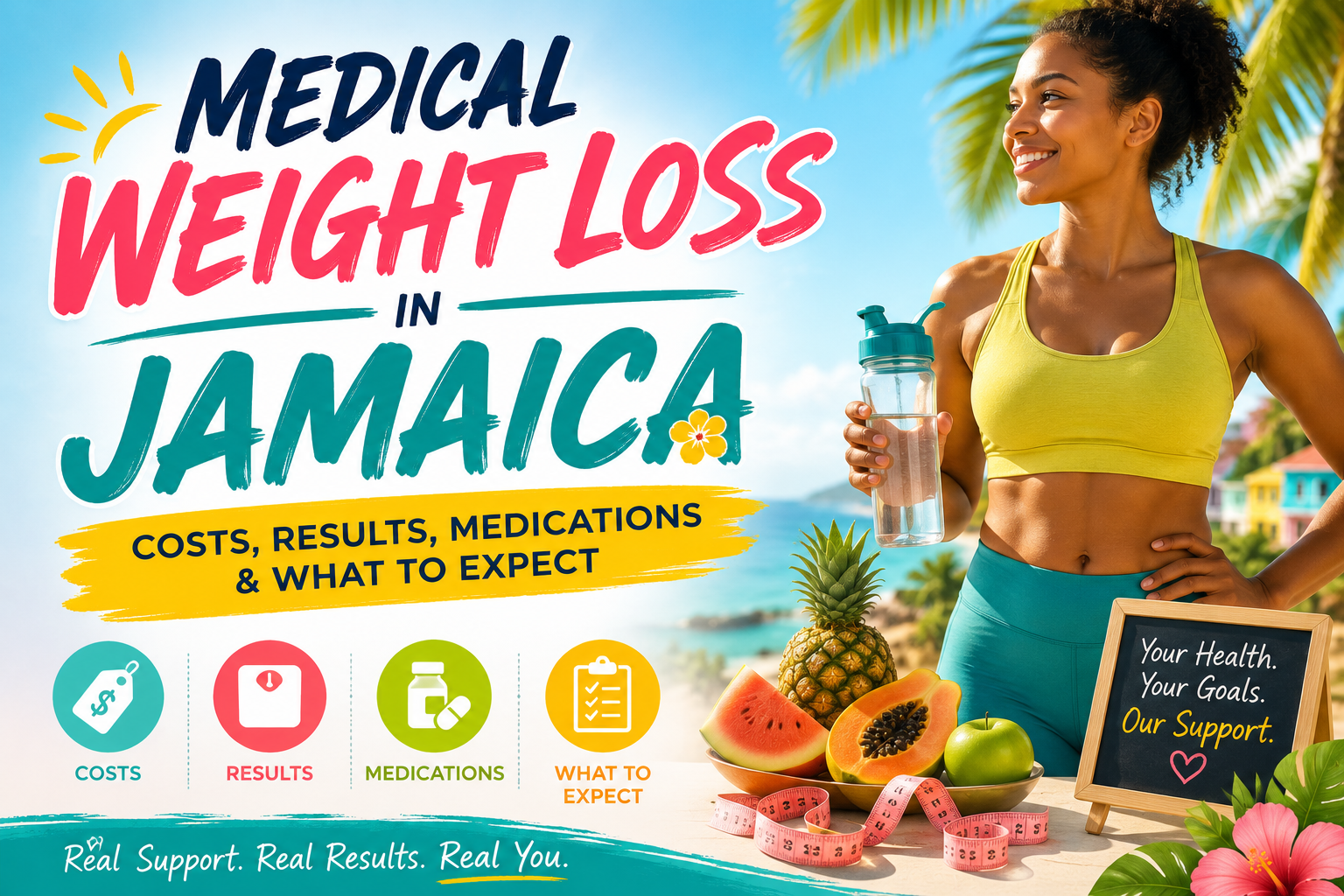
Medical Weight Loss in Jamaica: Is It Right for You?
Losing weight isn’t simply about eating less or exercising more. For many people, obesity is a chronic medical condition influenced by genetics, hormones, metabolism, medications, lifestyle, and underlying health problems.
If you’ve tried multiple diets without long-term success, medically supervised weight loss may be an effective option.
Today, newer medications have transformed obesity treatment, helping many patients lose significant weight when combined with healthy eating, regular physical activity, and ongoing medical support.
This guide explains how medical weight loss works, what it costs in Jamaica, the medications available, expected results, and why proper medical supervision is essential.
What Is Medical Weight Loss?
Medical weight loss is a doctor-supervised programme designed to help patients lose weight safely and maintain their results.
Unlike fad diets, medical weight loss focuses on treating obesity as a chronic disease using:
- Prescription medications
- Nutrition counselling
- Lifestyle coaching
- Regular monitoring
- Screening for obesity-related conditions
- Long-term maintenance strategies
The goal is not simply to lose weight quickly—it is to improve overall health and reduce the risk of diseases associated with obesity.
Who May Benefit?
Medical weight loss may be suitable for adults who:
- Have a Body Mass Index (BMI) of 30 kg/m² or higher, or
- Have a BMI of 27 kg/m² or higher with obesity-related conditions such as:
- Type 2 diabetes
- High blood pressure
- High cholesterol
- Obstructive sleep apnoea
- Fatty liver disease
- Polycystic ovary syndrome (PCOS)
Your doctor will assess whether medication is appropriate based on your medical history, current medications, and health goals.
How Much Does Medical Weight Loss Cost in Jamaica?
The monthly cost depends on the medication prescribed, dosage, and whether a brand-name or generic product is used.
Most patients should budget approximately: JMD $40,000–$100,000 per month
This may include:
- Medical consultation
- Prescription medication
- Follow-up appointments
- Monitoring and dose adjustments
Some patients may also require blood tests or additional investigations during treatment.
Although the upfront cost can seem significant, many patients view it as an investment in preventing obesity-related complications such as diabetes, heart disease, stroke, and joint problems.
How Quickly Will I Lose Weight?
One of the most common questions patients ask is:
“How long will it take?”
A realistic and healthy rate of weight loss is approximately:
1–2 pounds (0.5–1 kg) per week
While individual results vary, this means:
| Weight Loss Goal | Typical Time | Estimated Treatment Duration | Monthly Cost (JMD) | Estimated Total Cost (JMD) |
|---|---|---|---|---|
| 10 lbs (4.5 kg) | 5–10 weeks | 2–3 months | $40,000–$100,000 | $80,000–$300,000 |
| 20 lbs (9 kg) | 10–20 weeks | 3–5 months | $40,000–$100,000 | $120,000–$500,000 |
| 30 lbs (13.5 kg) | 15–30 weeks | 4–7 months | $40,000–$100,000 | $160,000–$700,000 |
| 50 lbs (23 kg) | 25–50 weeks | 6–12 months | $40,000–$100,000 | $240,000–$1,200,000 |
| 100 lbs (45 kg) | 50–100 weeks | 12–24 months | $40,000–$100,000 | $480,000–$2,400,000 |
Some patients lose weight more rapidly during the first few months, while others lose weight more gradually. Sustainable weight loss is generally safer and easier to maintain than rapid weight loss.
How Does This Compare to Weight Loss Surgery?
Many patients wonder whether medical weight loss or bariatric surgery offers better value.
Although medical weight loss may appear less expensive initially, the cumulative cost can become significant over time, particularly for individuals who require treatment for 12 months or longer. For example, someone aiming to lose 100 pounds may spend between JMD $480,000 and $2.4 million on medication and follow-up care over one to two years.
By comparison, bariatric surgery in Jamaica typically costs between approximately JMD $1.5 million and $2.5 million, depending on the procedure (such as sleeve gastrectomy or gastric bypass), the hospital, and the surgeon.
For patients with severe obesity (particularly a BMI ≥40 kg/m² or ≥35 kg/m² with obesity-related medical conditions), bariatric surgery may be more cost-effective in the long term, as it often results in greater and more durable weight loss, improved diabetes and blood pressure control, reduced medication requirements, and fewer obesity-related complications.
However, surgery is not suitable for everyone. Medical weight loss remains an excellent option for patients who:
- Prefer to avoid surgery.
- Have mild to moderate obesity.
- Need to lose weight before surgery.
- Are not medically fit for an operation.
- Want to determine whether lifestyle changes and medication alone can achieve their goals.
The best approach is an individualized one. A consultation with a physician experienced in obesity management can help determine whether medical therapy, bariatric surgery, or a combination of both is most appropriate based on your weight, overall health, medical conditions, and long-term goals.
What Medications Are Available?
Several prescription medications are available for obesity management. Availability in Jamaica may vary over time.
Common options include medications containing:
- Semaglutide
- Tirzepatide
- Liraglutide
These medications work by mimicking natural gut hormones that help regulate:
- Appetite
- Hunger
- Fullness
- Blood sugar
- Gastric emptying
Patients often find they feel full sooner, snack less frequently, and have fewer food cravings.
All these options are avaialble through Dr. Kadria Fairclough.
Brand-Name vs Generic Medications
Many patients ask whether generic medications work as well as brand-name products.
Brand-Name Medications
Brand-name medications have:
- Completed extensive clinical trials
- Strict manufacturing standards
- Proven effectiveness and safety
- Consistent dosing
- Established quality control
They are usually the more expensive option.
Generic Medications
Generic medications contain the same active ingredient as the original medicine but are produced after patent protections allow additional manufacturers.
Depending on the product and regulatory approval, generic medicines may offer a more affordable alternative.
However, not all products marketed as “generic” or “compounded” have the same level of evidence, manufacturing oversight, or quality assurance as the original branded medications.
Your doctor can help you understand the differences and recommend the most appropriate option for your circumstances.
Possible Side Effects
Like all prescription medications, weight loss medicines can cause side effects.
The most common include:
- Nausea
- Vomiting
- Constipation
- Diarrhoea
- Heartburn
- Bloating
- Reduced appetite
- Fatigue during dose increases
These symptoms are often mild and improve as the body adjusts to treatment.
Starting at a low dose and increasing gradually helps reduce side effects.
Less Common but Serious Risks
Although uncommon, serious complications can occur.
These may include:
- Gallstones
- Gallbladder inflammation
- Pancreatitis
- Severe dehydration from persistent vomiting
- Kidney injury related to dehydration
- Allergic reactions
Patients should seek urgent medical attention if they develop:
- Severe abdominal pain
- Persistent vomiting
- Yellowing of the skin or eyes
- Difficulty breathing
- Severe dehydration
Why Medical Monitoring Is Essential
Weight loss medication should never be viewed as a simple injection or prescription.
Regular follow-up allows your healthcare provider to:
- Monitor your progress
- Assess side effects
- Adjust medication doses
- Review nutrition and exercise
- Check blood pressure
- Monitor blood sugar (if applicable)
- Assess kidney function when appropriate
- Ensure weight loss remains safe and sustainable
These appointments also help patients stay motivated and address challenges before they become barriers to success.
Is the Weight Permanent?
Weight loss medications are powerful tools, but they are not a cure for obesity.
Studies have shown that many people regain weight after stopping medication if healthy eating habits, physical activity, and long-term lifestyle changes are not maintained.
For some individuals, obesity requires ongoing treatment, much like high blood pressure or diabetes.
Your doctor will work with you to develop a long-term maintenance plan.
Frequently Asked Questions
Will I have to exercise?
Yes. Medication works best when combined with regular physical activity and a balanced diet.
Will I lose weight without changing my diet?
Some weight loss may occur, but lifestyle changes significantly improve results and help maintain them over time.
Can I stop the medication once I reach my goal?
Possibly. Some patients can successfully stop treatment while maintaining healthy habits, while others may benefit from longer-term therapy. This decision should be made with your healthcare provider.
Are these medications suitable for everyone?
No. They are not recommended for everyone and may not be appropriate during pregnancy, breastfeeding, or for individuals with certain medical conditions. A full medical assessment is essential before starting treatment.
Thinking About Medical Weight Loss?
If you’ve struggled to lose weight despite your best efforts, a medically supervised programme may help you achieve your goals safely and effectively.
A consultation allows your healthcare provider to assess your overall health, discuss the most appropriate treatment options, explain the potential benefits and risks, and develop a personalised plan tailored to your needs.
