

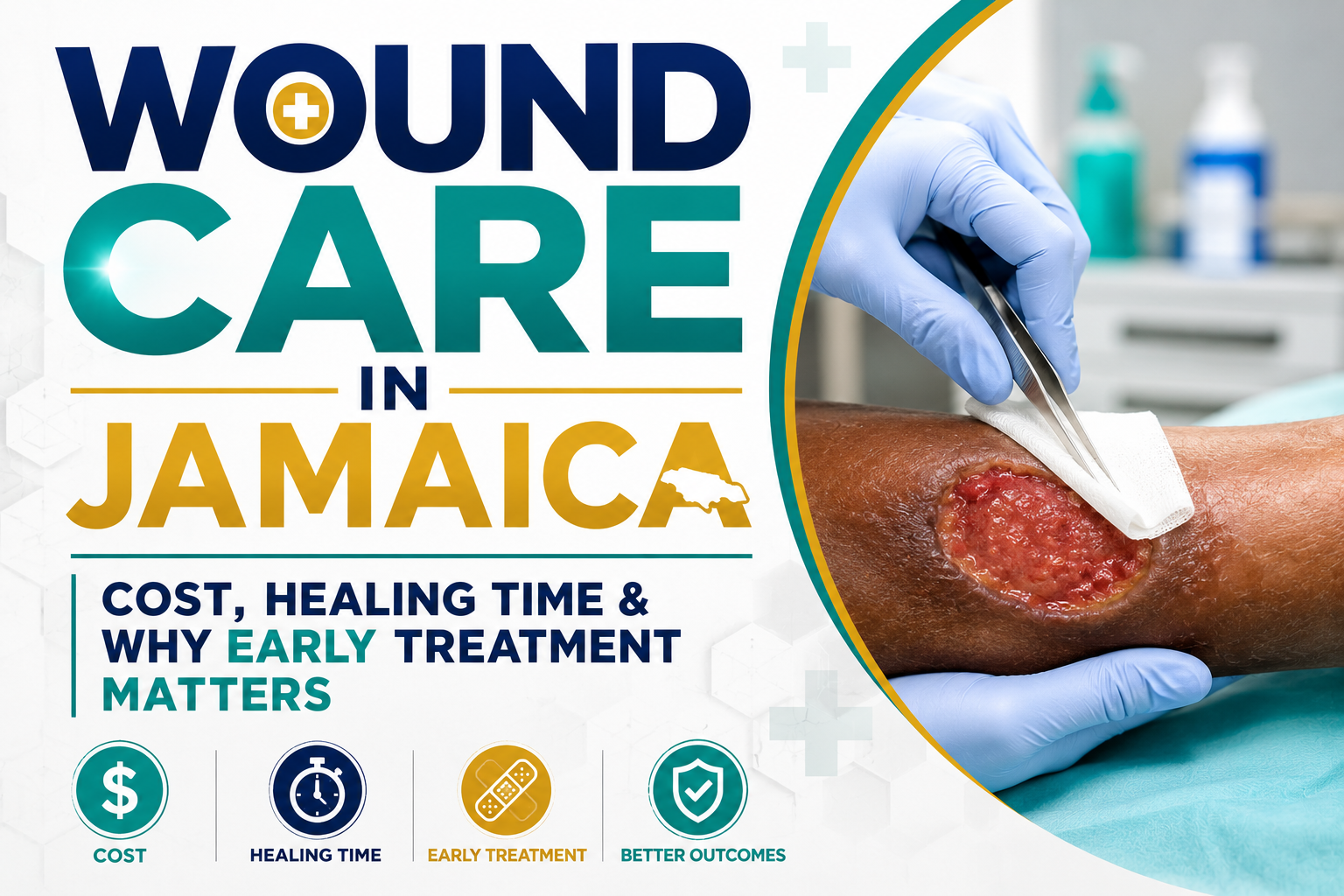
It may start as a small cut, a blister from a new pair of shoes, or a sore that just won’t heal. Many people assume it will eventually get better on its own. Unfortunately, that isn’t always the case.
Every year, thousands of Jamaicans develop chronic wounds—wounds that fail to heal properly because of poor circulation, diabetes, prolonged pressure, infection, or underlying medical conditions. Left untreated, these wounds can become larger, infected, and much more difficult to heal.
The good news is that early professional wound care dramatically improves healing, reduces pain, lowers the risk of serious complications, and can even prevent amputation.
What Is a Chronic Wound?
A chronic wound is simply a wound that isn’t healing as expected. While most cuts and scrapes heal within a few weeks, chronic wounds may remain open for months if the underlying problem isn’t treated.
Common examples include:
- Diabetic foot ulcers
- Pressure sores (also called bed sores or sacral ulcers)
- Venous leg ulcers
- Surgical wounds that are slow to heal
- Traumatic wounds
- Infected wounds
How Do You Know If a Wound Needs Professional Care?
You should seek medical attention if you are diabetic or have circulatory issues and/or your wound:
- Has not improved after two weeks
- Is becoming larger instead of smaller
- Is draining pus or has an unpleasant smell
- Is increasingly painful
- Has redness spreading around it
- Has black or dead tissue
- Keeps reopening
- Occurs if you have diabetes or poor circulation
Remember—pain is not always a reliable warning sign. Many people with diabetes have reduced sensation in their feet and may have a serious wound with very little pain.
Why Early Treatment Is So Important
One of the biggest mistakes people make is waiting until the wound becomes severe before seeking help.
Early treatment allows healthcare professionals to:
- Remove dead tissue before infection develops
- Improve blood flow assessment
- Identify the underlying cause
- Apply the appropriate dressings
- Prevent the wound from becoming larger
- Reduce healing time
- Lower the risk of hospital admission
Treating a wound early is often simpler, less painful, less expensive, and far more successful than treating one that has been neglected.
What Happens During Your First Wound Care Visit?
According to Dr. Deion Quallis Sterling, your first appointment is much more than just dressing the wound.
It includes a comprehensive assessment to understand why the wound developed and what is preventing it from healing.
Your initial consultation costs JMD $15,000 and includes:
- A comprehensive wound assessment
- Mini Doppler examination to assess blood flow to the affected limb
- Professional wound cleaning
- Debridement if appropriate (removal of dead tissue)
- Application of a suitable wound dressing
- A personalized treatment plan
The mini Doppler assessment is especially important because poor circulation is one of the leading reasons wounds fail to heal. Identifying circulation problems early helps guide the safest and most effective treatment.
Follow-Up Visits
Healing takes time, and most chronic wounds require regular review.
Follow-up visits start from JMD $7,500, depending on the complexity of the wound and the treatment required.
At each visit, your wound is reassessed, cleaned, and dressed, and your treatment plan is adjusted as healing progresses.
How Many Visits Will I Need?
This is one of the first questions most patients ask, and while every wound is different, your healthcare provider can usually give you a good idea after your initial assessment.
The number of visits depends on:
- The size and depth of the wound
- Whether there is an infection
- Blood supply to the area
- Your blood sugar control (if you have diabetes)
- Your overall health and nutrition
- How closely you follow your treatment plan
Below are typical treatment ranges for common chronic wounds.
Sacral Pressure Ulcers (Bed Sores)
Sacral ulcers occur over the lower back or buttocks and are common in people who spend prolonged periods in bed or in a wheelchair.
If the ulcer contains extensive dead tissue requiring repeated debridement, most patients can expect:
- 12–24 wound care visits over approximately 3–6 months
- Very large Stage IV pressure ulcers or wounds with exposed bone may require 30 or more visits over 6–12 months, particularly if surgery is not performed.
Regular debridement and pressure relief are essential to promote healthy tissue growth and reduce the risk of infection.
Diabetic Foot Ulcers
Diabetic foot ulcers often require weekly reviews because healing depends on good blood sugar control, adequate circulation, and keeping pressure off the affected foot.
For most patients:
- 6–12 visits over 6–12 weeks for uncomplicated ulcers.
- More complex or infected ulcers may require 12–20 visits over 3–5 months.
Early treatment significantly reduces the risk of infection, hospitalization, and lower limb amputation.
Chronic Venous Leg Ulcers
Venous leg ulcers are caused by poor blood flow returning from the legs to the heart. Treatment usually combines professional wound care with compression therapy when appropriate.
Most patients require:
- 8–16 visits over 8–16 weeks for smaller ulcers.
- Larger or longstanding ulcers may require 16–24 visits over 4–6 months.
Healing is generally faster when patients wear compression bandages or stockings as recommended and remain physically active.
Why You Should Never Treat Chronic Wounds Yourself
Many patients try:
- Home remedies
- Herbal treatments
- Antiseptics that damage healthy tissue
- Repeatedly changing dressings without addressing the underlying problem
While these approaches are well-intentioned, they often delay healing.
Professional wound care is about much more than placing a bandage over a wound. It involves identifying and treating the cause while creating the best environment for healing.
What Happens If a Wound Is Left Untreated?
Ignoring a chronic wound can have serious consequences.
Without proper treatment, wounds may lead to:
- Serious infection
- Bone infection (osteomyelitis)
- Gangrene
- Sepsis (a life-threatening infection affecting the whole body)
- Chronic pain
- Reduced mobility
- Prolonged hospital stays
- Amputation
- Reduced quality of life
The longer a wound remains untreated, the more difficult and expensive it often becomes to manage.
Frequently Asked Questions
Will my wound heal completely?
Many chronic wounds heal successfully when the underlying cause is identified and treated early. Healing time varies depending on the wound type, circulation, diabetes control, nutrition, and overall health.
Is wound debridement painful?
Some discomfort may occur, but your healthcare provider will use appropriate techniques to minimise pain while safely removing dead tissue that prevents healing.
Do I need antibiotics?
Not every wound requires antibiotics. Antibiotics are only needed when there is evidence of infection. Overuse of antibiotics can contribute to antibiotic resistance.
Can I continue working?
Many patients can continue their normal activities with appropriate precautions. Your healthcare provider will advise you if you need to reduce pressure on the wound or modify your daily routine.
The Bottom Line
A wound that doesn’t heal is never “just a wound.” It is often a sign that something else needs attention, whether that’s poor circulation, diabetes, infection, or prolonged pressure.
Seeking professional care early can mean:
- Faster healing
- Less pain
- Lower treatment costs
- Fewer complications
- Reduced risk of amputation
- Better quality of life
If you have a wound that isn’t improving, don’t wait for it to become an emergency. Early assessment and expert wound care can make all the difference.
Patients who seek treatment early almost always require fewer visits, experience fewer complications, and achieve better healing than those who delay care.
Consult with Dr. Quallis Sterling today.
